
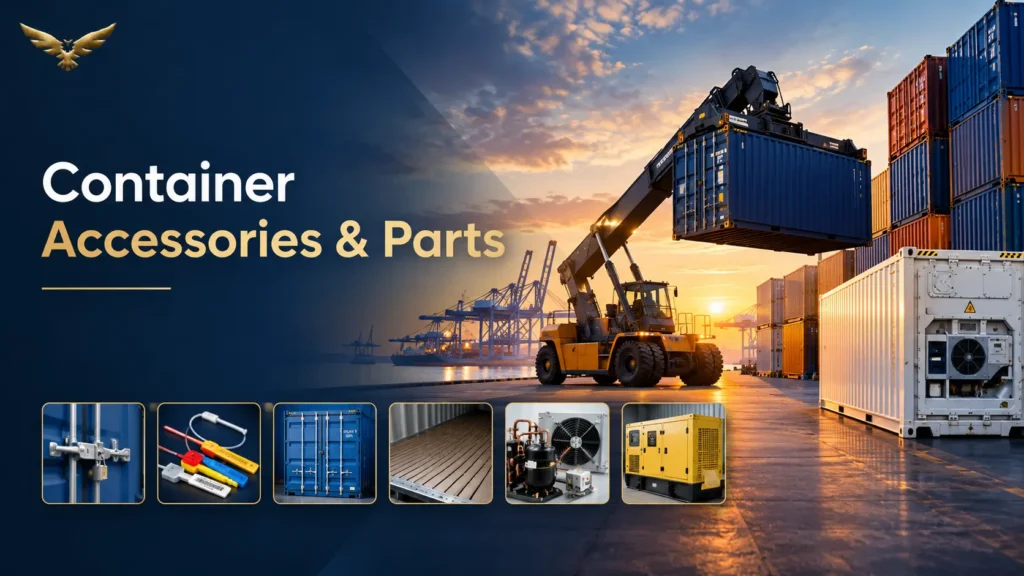
Container Accessories and Parts
Pearltainer FZE provides a point of contact for businesses looking for container accessories and parts for shipping containers, storage containers, refrigerated containers, and related equipment. From container locks and security seals to replacement doors, flooring materials, reefer spare parts, and generator sets, selecting the right component is essential for container security, operational reliability, cargo protection, and maintenance planning.
Shipping containers operate in demanding environments across shipping, logistics, warehousing, manufacturing, construction, offshore support, and international trade. Exposure to weather, frequent handling, corrosion, repeated opening and closing, and intensive operating cycles can cause components to wear or require replacement. Using compatible parts and following appropriate maintenance procedures can help keep containers fit for their intended purpose.
Whether you manage a container fleet, maintain refrigerated transport equipment, operate a warehouse, or need replacement components for an individual container, it is important to identify the correct part before ordering. Compatibility can depend on container type, dimensions, manufacturer, model, year, operating conditions, and technical specifications.
Pearltainer FZE welcomes enquiries for container accessories and parts from customers in Dubai, Sharjah, Abu Dhabi, across the UAE, and international markets. Product availability, specifications, compatibility, and delivery arrangements should be confirmed for each requirement.
Explore Our Container Accessories and Parts
Container accessories perform a variety of functions, including securing cargo, protecting container access points, maintaining weather resistance, supporting safe handling, restoring damaged interiors, and operating refrigerated equipment. Choosing the right component begins with understanding the container’s intended application and the problem that needs to be addressed.
Our main container accessories and parts categories include:
- Container Locks for securing container doors and access points.
- Container Seals for tamper evidence and shipment security.
- Container Doors and Door Components for repair or replacement.
- Container Flooring for suitable repairs and replacement applications.
- Reefer Container Parts for refrigerated container maintenance.
- Container Gensets for supporting refrigerated container power requirements.
Additional accessories may be required depending on the container design and operating environment. Before purchasing, confirm the part number, measurements, technical requirements, installation method, and any relevant safety or certification requirements.
Shipping Container Locks
Container locks help restrict unauthorised access to shipping containers, storage containers, and other compatible enclosures. They are an important consideration for logistics operators, warehouse managers, exporters, importers, contractors, and businesses storing valuable equipment or materials.
The appropriate locking solution depends on the container’s door configuration, the level of security required, the storage environment, and whether the container is stationary or regularly transported. Locks should be selected to work with the container’s existing locking arrangement without obstructing safe operation.
Container Door Locking Solutions
Shipping containers commonly use locking bars and locking handles built into their door assemblies. Additional security products may be used with compatible door hardware to restrict access beyond the standard locking mechanism.
Depending on the application and availability, buyers may enquire about:
- Container-compatible padlocks.
- Lockboxes and protective lock enclosures.
- Security locks for compatible container door systems.
- Replacement locking handles and related hardware.
- Locking-bar components and associated fittings.
Not every lock or lockbox fits every container. Buyers should provide photographs of the door locking arrangement, measurements, and the container type when requesting a suitable replacement or upgrade.
Container Locks for Storage and Transport
Storage containers may remain at construction sites, industrial premises, warehouses, retail locations, or private properties for extended periods. A compatible lock can help control access to tools, materials, inventory, and equipment.
For containers used in transport, security planning should consider the entire supply chain. A lock can help deter unauthorised access, but it does not replace appropriate cargo documentation, handling procedures, transport security, or inspection protocols.
Choosing the Right Container Lock
Before ordering a container lock, consider the following factors:
- Compatibility with the container door and locking-bar design.
- Required level of physical security and access control.
- Resistance to weather, corrosion, dust, and the intended environment.
- Ease of authorised access for daily operations.
- Key management or other access-control requirements.
- Installation clearance and compatibility with existing hardware.
For high-security applications, confirm the product’s actual security rating and supporting documentation rather than relying on a general description such as heavy-duty or high-security.
Container Seals and Security Seals
Container seals are used to provide evidence of whether a sealed container or access point may have been opened or tampered with. They are commonly relevant to international shipping, freight forwarding, cargo handling, warehousing, and supply-chain security procedures.
A seal supports inspection and accountability, but it is not the same as a physical lock. Many seals are intended to be removed or broken during authorised opening, while others are designed for particular access-control or inspection procedures.
Shipping Container Bolt Seals
Bolt seals are commonly used for securing compatible cargo-container door locking points during transport. They typically consist of a bolt and locking body and are intended to provide tamper evidence when properly installed and inspected.
For international cargo movements, seal selection may be influenced by customer requirements, carrier procedures, security protocols, and applicable standards. Buyers should confirm whether a particular seal meets the requirements of the intended shipment.
Cable Seals and Other Tamper-Evident Seals
Cable seals may be useful for a range of compatible doors, access points, equipment enclosures, and logistics applications. Other seal formats may be suitable for specific operational needs, depending on the required security function and installation point.
When comparing seals, consider their construction, tamper-evident design, installation method, identification markings, unique numbering, and documentation. The selected seal should be appropriate for the risk level and procedures of the organisation using it.
Container Seal Numbers and Shipment Records
Seal identification plays an important role in cargo traceability. Where numbered seals are used, the seal number should be recorded accurately in the relevant shipment documents, inspection records, or tracking system.
At designated checkpoints, authorised personnel should verify that the seal number matches the documentation and that the seal shows no obvious signs of tampering. Any discrepancy should be handled according to the organisation’s security procedures.
How to Select Container Security Seals
Before requesting a quotation, establish:
- The seal type and intended application.
- The required quantity and identification format.
- Any applicable customer, carrier, or shipment requirements.
- Required documentation or conformity information.
- The destination and expected delivery schedule.
For shipments with specific security or compliance requirements, verify the exact seal specification before purchase. Not every container seal is suitable for every cargo movement or security programme.
Shipping Container Doors and Door Parts
Container doors protect the cargo space and help maintain the enclosure’s security and weather resistance. Damage to a door, locking bar, hinge, gasket, or other associated component can affect safe operation and the container’s suitability for its intended use.
Replacement doors and door components must match the container’s design and dimensions. Correct selection is particularly important where the container is expected to remain weather-resistant, handle repeated operational use, or meet a specific cargo-service requirement.
Container Door Replacement
Replacement container doors may be required following accidental damage, corrosion, deformation, failed hinges, or deterioration that cannot be addressed through an appropriate repair. The correct replacement depends on the container type, door opening dimensions, frame condition, and original assembly design.
Before ordering a replacement door, provide the container size and type, photographs of the existing door and frame, opening measurements, hinge positions, locking-bar arrangement, and any available manufacturer or container identification information.
Door replacement may involve structural alignment, welding, weather sealing, and other work. Repairs should be assessed and completed by appropriately qualified personnel, particularly where structural integrity or cargo safety may be affected.
Container Door Hinges and Locking Bars
Door hinges allow the doors to open and close, while locking bars and handles secure the doors in their closed position. These components are subject to mechanical wear, impact, corrosion, and repeated use.
Depending on the container design, replacement requirements may include hinge components, hinge pins, locking bars, locking handles, retainers, brackets, and related fittings. Exact dimensions and mounting arrangements should be checked before ordering.
Damaged locking mechanisms should not be forced or improvised in a way that compromises door operation. If the door is distorted or under load, a qualified technician should assess the condition before attempting repairs.
Container Door Gaskets and Weather Seals
Door gaskets and weather seals help limit water entry, dust ingress, and unwanted exposure through suitable door interfaces. Damaged, hardened, loose, or poorly fitted gaskets can reduce the effectiveness of the container enclosure.
Replacement gasket selection depends on the door profile, groove or attachment design, material requirements, and environmental conditions. For refrigerated containers, door sealing components must meet the specific requirements of the reefer design and should not be treated as interchangeable with ordinary dry-container seals.
Inspecting Container Doors Before Replacement
When assessing a damaged door, inspect the door panel, frame, hinges, locking bars, handles, gaskets, and surrounding structure. Look for deformation, corrosion, cracks, missing fittings, and signs that the door no longer closes or seals correctly.
If the frame or container structure is damaged, replacing a single component may not resolve the problem. A suitable technical inspection can help determine whether the container requires a component replacement, repair, or a broader structural assessment.
Container Flooring and Replacement Floor Materials
Container flooring provides the surface that supports cargo, equipment, and operational loads inside a container. Flooring requirements vary according to the container’s design, the type of goods carried, loading methods, environmental exposure, and any special hygiene or performance requirements.
Shipping containers may use engineered timber flooring or other specified flooring systems, while certain specialised containers use different materials or construction methods. Replacement flooring must be compatible with the container’s structure and intended service.
Shipping Container Plywood and Timber Flooring
Engineered timber flooring is used in many conventional shipping containers. Depending on the original specification, the floor may consist of panels installed over supporting cross-members and secured using the intended fastening system.
Flooring replacement may become necessary when panels are damaged, deteriorated, contaminated, or no longer suitable for the intended cargo. The replacement material should match the required thickness, strength, fixing arrangement, and performance characteristics.
For cargo transport, confirm any applicable treatment, material, and documentation requirements. Do not assume that a generic plywood or timber sheet is an appropriate replacement for a specified container floor system.
Container Floor Repairs and Maintenance
Routine inspections can help identify floor damage before it creates a larger operational problem. Check for cracks, loose panels, excessive wear, moisture damage, contamination, and signs of structural movement.
Repair decisions should account for the extent of the damage and the condition of the supporting structure. Where the floor is weakened or its load-bearing capability is uncertain, a qualified inspection is appropriate before the container is loaded or returned to service.
Flooring for Specialised Container Applications
Different applications may require different floor characteristics. Equipment containers, workshops, modified containers, and specialised transport units may have specific requirements for load distribution, cleanability, moisture resistance, or compatibility with installed machinery.
Refrigerated containers use purpose-designed floor arrangements to support airflow and the reefer system’s operating requirements. Flooring modifications in a refrigerated container should be assessed against the original design to avoid obstructing airflow or affecting refrigeration performance.
What to Check When Ordering Container Flooring
- Container type, dimensions, and intended application.
- Required floor thickness, material, and panel dimensions.
- Supporting structure and fixing requirements.
- Expected cargo loads and loading methods.
- Moisture, chemical exposure, hygiene, or other environmental requirements.
- Any applicable material treatment and compliance documentation.
Accurate measurements and an understanding of the original floor construction help reduce the risk of ordering incompatible materials.
Reefer Container Parts and Refrigeration Components
Refrigerated containers, commonly called reefer containers, are designed to maintain specified cargo conditions during storage and transport. Their performance depends on the refrigeration system, electrical supply, air circulation, sensors, controls, door seals, and other components working together correctly.
Reefer equipment is more specialised than a conventional dry shipping container. Replacement parts must match the refrigeration unit’s make, model, configuration, and technical requirements. Incorrect components can cause poor performance, equipment damage, cargo loss, or safety risks.
Reefer Refrigeration System Components
Depending on the refrigeration unit design, maintenance and repair enquiries may involve components such as:
- Refrigeration system components and approved service parts.
- Fans, fan motors, and associated assemblies.
- Temperature sensors and control sensors.
- Control boards, displays, and compatible electronic components.
- Electrical connectors, wiring components, and specified protective devices.
- Airflow-related components and compatible duct or grille parts.
- Door gaskets and other suitable sealing components.
- Filters and other maintenance items where specified by the manufacturer.
This list is illustrative rather than a confirmation of current stock. Availability and compatibility should be checked against the exact reefer unit and part reference.
Reefer Temperature Sensors and Control Systems
Temperature sensors and control systems help monitor and regulate the operating conditions of a refrigerated container. Sensor faults, damaged wiring, or control-system problems can affect temperature readings and refrigeration operation.
Replacement sensors, controllers, displays, and related electronic parts must match the equipment specification. Fault diagnosis should be performed using the manufacturer’s prescribed procedures and appropriate test equipment.
Where cargo depends on a controlled temperature range, operators should follow the applicable monitoring, alarm-response, calibration, and recordkeeping procedures. Replacing a component alone does not establish that the reefer is performing correctly; the system should be tested after repair.
Reefer Fans, Motors, and Airflow Components
Air circulation is important to the operation of refrigerated containers. Fans and related components help distribute conditioned air according to the equipment design. Damage, obstruction, or component failure can affect airflow and the uniformity of cargo conditions.
Before requesting a replacement, identify the relevant fan assembly or motor, equipment model, electrical characteristics, mounting arrangement, and part number where available. Parts should be selected to match the original technical requirements rather than on physical appearance alone.
Reefer Electrical Parts and Power Connections
Refrigerated containers rely on compatible electrical connections and protective systems. Depending on the equipment, maintenance may involve specified connectors, cables, circuit protection components, control wiring, or other electrical parts.
Electrical work should be carried out by suitably qualified technicians using approved procedures. Before replacing electrical parts, confirm voltage, frequency, current requirements, connector type, environmental rating, and compatibility with the refrigeration equipment.
Reefer Spare Parts Identification
The fastest way to identify the correct reefer component is to provide the information from the equipment nameplate and the available parts documentation. Useful details include:
- Refrigeration unit manufacturer and model.
- Serial number and equipment identification details.
- Part number of the required component, if known.
- Photographs of the part, connectors, and installation location.
- Description of the fault or maintenance requirement.
- Required quantity and delivery destination.
Refrigeration systems can contain pressurised refrigerants and high-voltage electrical components. Diagnosis, refrigerant handling, and repairs should be undertaken by appropriately qualified personnel following applicable safety and environmental requirements.
Container Gensets for Refrigerated Containers
Container gensets, or generator sets, are used in suitable configurations to provide electrical power for refrigerated containers when an appropriate fixed power source is unavailable. They are relevant to certain transport operations, logistics applications, and locations where reefer containers need to operate away from a permanent electrical connection.
Genset compatibility is important because the generator must meet the electrical and operating requirements of the refrigerated container. Selection depends on the reefer unit’s power demand, voltage, frequency, connection arrangement, operating conditions, and the intended mounting or deployment configuration.
Clip-On Container Gensets
Clip-on gensets are designed for compatible refrigerated containers and are generally mounted to the container’s designated end-frame or attachment arrangement. Their purpose is to supply power to the reefer unit during suitable transport or off-grid operating conditions.
Before selecting a clip-on genset, confirm the container and refrigeration-unit compatibility, mounting interface, electrical output, fuel requirements, dimensions, weight, and operating specifications. Not every generator set fits every reefer container or refrigeration system.
Underslung and Other Genset Configurations
Some reefer operations use generator configurations designed for particular transport equipment or operating arrangements. Depending on the equipment, these may include underslung or other specialised mounting formats.
Installation compatibility, vehicle or chassis requirements, ground clearance, mounting points, ventilation, fuel-system arrangement, and maintenance access must be checked before purchase. The required configuration depends on how and where the refrigerated container will be operated.
Choosing a Genset for Reefer Operations
When requesting a genset quotation, provide the following information:
- Refrigerated container size and refrigeration-unit model.
- Required generator configuration and mounting arrangement.
- Electrical output requirements, including voltage and frequency.
- Operating duration, load profile, and intended environment.
- Fuel type and relevant fuel-system requirements.
- Installation constraints and maintenance access needs.
- Required safety, emissions, and other applicable compliance documentation.
- Delivery location and required delivery date.
Generator sizing should be based on the actual electrical load and manufacturer requirements. An undersized or incompatible genset may fail to operate the refrigeration equipment correctly, while an unsuitable installation can create electrical, fire, ventilation, or exhaust hazards.
Genset Maintenance and Operating Considerations
Regular maintenance is important for reliable generator operation. Depending on the model and manufacturer guidance, maintenance may involve inspection of the engine, fuel system, electrical connections, cooling system, filters, belts, batteries, and other service items.
Follow the equipment manufacturer’s service schedule and use suitable replacement parts. Generator operation must account for exhaust ventilation, fuel handling, noise, fire safety, and the risks associated with moving or hot components. Gensets should never be operated in enclosed or inadequately ventilated areas where exhaust gases can accumulate.
Container Accessories for Shipping, Storage, and Industrial Use
Different container applications create different accessory requirements. A container used for international cargo transport may need suitable seals, functioning doors, and compliant flooring. A storage container may prioritise access control and weather protection. A refrigerated container requires compatible refrigeration parts and, where applicable, a suitable power solution.
Shipping and Freight Forwarding
Shipping companies, freight forwarders, exporters, importers, and logistics providers may require security seals, door hardware, flooring components, and reefer spare parts for container operations. Component identification and traceability can help streamline maintenance and reduce the risk of incompatible replacements.
Warehousing and Distribution
Warehouses and distribution centres may use containers for overflow storage, temporary inventory, equipment protection, or specialised cargo applications. Locks, replacement doors, weather seals, and appropriate flooring materials can support routine operation when correctly specified and maintained.
Construction and Industrial Projects
Construction companies, contractors, and industrial operators may need container accessories for storage, site equipment, workshops, and project support. The right combination of access security, door components, and suitable flooring can help address practical site requirements.
Cold Chain and Temperature-Controlled Logistics
Cold-chain operators rely on refrigerated equipment to support cargo temperature requirements. Compatible reefer spare parts, correctly selected gensets, suitable maintenance procedures, and effective monitoring can contribute to dependable operation.
Equipment selection should be based on the required cargo conditions and the refrigeration system’s documented capabilities. A repaired or serviced reefer should be tested before being relied upon for temperature-sensitive shipments.
How to Identify the Correct Container Spare Part
Ordering the correct component at the outset can reduce delays, unnecessary returns, and installation problems. The identification process differs for simple hardware and specialised refrigeration or generator equipment, but accurate information is useful in every case.
Step 1: Identify the Container or Equipment
Record the container type, size, equipment identification details, and intended application. For reefer parts and gensets, identify the refrigeration unit or generator manufacturer, model, and serial number where available.
Step 2: Describe the Required Component
State whether you need a lock, seal, door, gasket, floor panel, sensor, motor, electrical component, genset, or another part. Include the part number and measurements if known.
Step 3: Provide Photographs and Technical Information
Clear photographs of the existing component, mounting points, connections, and equipment identification plate can help with initial identification. Photographs should supplement, not replace, required technical specifications.
Step 4: Confirm Compatibility and Required Documentation
Check dimensions, material, electrical characteristics, mounting arrangements, operating conditions, and relevant standards. Where a component is safety-critical or part of specialised machinery, obtain confirmation of compatibility before installation.
Step 5: Confirm Quantity, Delivery, and Scope of Supply
Specify the number of parts required, delivery location, preferred schedule, and whether installation or technical support is needed. Confirm the quotation’s inclusions and exclusions before placing the order.
Container Accessories and Parts in Dubai, Sharjah, and Abu Dhabi
Container operators and industrial customers in Dubai, Sharjah, Abu Dhabi, and other UAE locations may require replacement parts for container maintenance, storage security, cargo operations, or refrigerated equipment. Selecting compatible components is especially important when equipment must return to service within a planned operational window.
When enquiring about UAE supply, provide the destination, quantities, equipment details, and any delivery deadlines. For heavy or specialised components, confirm packaging, handling, unloading arrangements, and any site access restrictions before dispatch.
For reefer parts and gensets, buyers should allow time for technical identification and compatibility checks. Availability and lead times can vary by model, manufacturer, and component type, so requirements should be confirmed before relying on a specific delivery date.
International Enquiries for Container Accessories and Parts
Pearltainer FZE welcomes enquiries from customers considering container accessories and parts for international projects. Export feasibility, freight options, customs procedures, destination requirements, and delivery timelines depend on the specific product and destination.
International buyers should identify the part precisely and provide the destination country, city, quantity, required delivery date, and relevant technical documentation. For seals, locks, and other security products, confirm any customer or carrier requirements before purchase. For reefer components and gensets, confirm compatibility and electrical specifications before shipment.
For replacement components with special handling, environmental, or regulatory requirements, request the relevant documentation and confirm that the product can be shipped and used at the intended destination.
Why Enquire with Pearltainer for Container Accessories and Parts?
Pearltainer FZE provides a contact point for customers seeking container-related products and replacement components for logistics, storage, industrial, and refrigerated container applications. A clear specification helps establish the correct product category and the information needed to assess suitability.
- Enquiries for container locks, security seals, doors, and door hardware.
- Requirements for container flooring and compatible replacement materials.
- Reefer spare-part enquiries based on equipment identification and technical specifications.
- Genset enquiries for compatible refrigerated-container power applications.
- Support for clarifying quantities, destination, and delivery requirements.
- Product-specific discussions before a quotation and order are confirmed.
Product availability, brands, manufacturer authorisations, certifications, warranties, installation services, and technical support must be confirmed for the specific item. Buyers should review the final specification and quotation before placing an order.
Request a Container Accessories and Parts Quotation
Looking for container locks, security seals, replacement doors, flooring materials, reefer spare parts, or gensets? Contact Pearltainer FZE with your product requirements and delivery destination.
To help identify the appropriate parts, include:
- Required accessory or part category.
- Container size, type, and intended application.
- Manufacturer, model, serial number, or part number where available.
- Measurements, photographs, and relevant technical specifications.
- Required quantity and any preferred brand or specification.
- Delivery city and country.
- Target delivery date and any special handling requirements.
Pearltainer FZE
United Arab Emirates
Phone: +971 6 553 6205
Email: info@pearltainer.com
Website: https://pearltainer.com/
Frequently Asked Questions About Container Accessories and Parts
What container accessories and parts can I enquire about?
Common enquiry categories include container locks, security seals, doors, hinges, locking bars, door gaskets, flooring materials, reefer spare parts, and gensets for compatible refrigerated containers. Availability and specifications should be confirmed for each item.
How do I choose the correct shipping container lock?
Check the container door design, locking arrangement, security requirements, environmental conditions, and available installation space. Provide photographs and measurements to help identify a compatible lock or lockbox.
What is the difference between a container lock and a container seal?
A lock is intended to restrict access, while a security seal is generally used to provide evidence of possible tampering or opening. Some operations use both, depending on security procedures and shipment requirements.
Can I order replacement container doors and door parts?
Replacement door and hardware enquiries should include the container type, dimensions, photographs, hinge positions, locking arrangement, and details of the damaged component. Compatibility and the condition of the surrounding structure must be assessed before replacement.
What should I consider when replacing container flooring?
Check the container design, floor material, thickness, panel dimensions, supporting structure, fixing method, intended cargo, and expected loads. Specialised containers may have additional requirements, so the replacement floor must match the intended application.
How do I identify the correct reefer container spare part?
Provide the refrigeration-unit manufacturer, model, serial number, part number if available, and photographs of the component and its installation. Confirm the replacement’s technical compatibility before ordering.
What is a container genset used for?
A container genset supplies electrical power to a compatible refrigerated container when an appropriate fixed power source is unavailable. The correct generator depends on the refrigeration unit’s electrical requirements, mounting configuration, and operating conditions.
Are all reefer spare parts interchangeable?
No. Reefer parts can differ by manufacturer, model, design, and equipment revision. Verify the exact part reference and technical specifications rather than selecting a component based only on its appearance.
Can I enquire about container accessories in the UAE?
Yes. Customers can enquire about container accessories and parts for projects in Dubai, Sharjah, Abu Dhabi, and other UAE locations. Product availability, delivery arrangements, and lead times should be confirmed for the requested items.
Can container parts be supplied for international projects?
International enquiries can be submitted with the destination country, city, required parts, quantities, technical details, and delivery schedule. Export feasibility, freight, customs requirements, and product compliance should be confirmed before an order is finalised.
What information should I provide for a parts quotation?
Include the required component, container or equipment details, part number if known, quantity, photographs, technical requirements, delivery location, and expected delivery date. For reefer parts and gensets, accurate model and specification details are especially important.
Pearltainer – Your Container Accessories and Parts Contact
From container locks and seals to replacement doors, flooring, reefer spare parts, and gensets, choosing the correct component starts with accurate identification and compatibility checks. Provide the relevant technical information, confirm the intended application, and review the product specification before ordering.
Contact Pearltainer FZE to discuss your container accessories and parts requirements for the UAE or an international destination.
Website: Pearltainer FZE | Email: info@pearltainer.com | Phone: +971 6 553 6205
Enquiry Form
Select your requirements to prepare a structured enquiry for the Pearltainer sales team.